Date/Time
Date(s) - September 2, 2026 - December 13, 2026
10:00 am - 6:00 pm
Location
Gregory Allicar Museum of Art, University Center for the Arts
AfroBohemian Home: An Installation by Zsudayka Nzinga
September 2–December 13, 2026
Main Gallery South
Curated by Louise Cutler
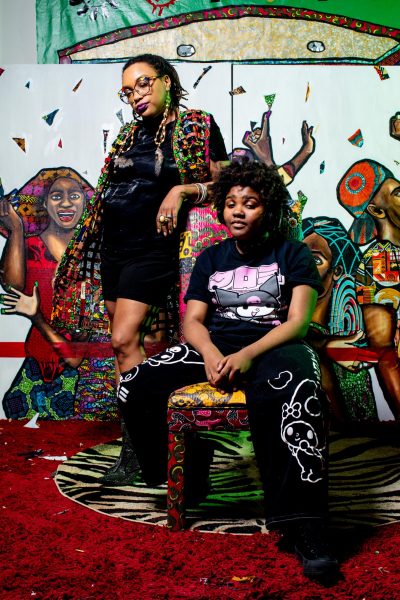
In AfroBohemian Home, Zsudayka Nzinga transforms a gallery in the museum into a meticulously crafted domestic space that embodies the rich tapestry of Black American culture. More than a visual experience, the installation is an immersive journey into AfroBohemia, a term pointing to a fusion of cultures, including African and Black American.
The idea of the Black home is at the core of the work, not just as a physical space but as a bastion of culture, strength, and unity. The installation portrays the home as a sanctuary where traditions are upheld, stories are told, and futures are forged. Within these walls, the essence of Black life is preserved and celebrated, serving as a powerful reminder of the importance of community and kinship. Also central to this installation is the collaboration between Nzinga and her daughter, Satra Terrell, who is also a multi-disciplinary artist working with animation, painting, furniture building, and upholstery. Together, they handcrafted most of the installation’s elements such as reupholstered chairs and custom-built furniture, symbolizing the transmission of cultural knowledge and artistic skills across generations. This partnership not only highlights familial bonds but also underscores the importance of acknowledging the passing down of knowledge within the family.
Nzinga’s artistic process is deeply rooted in cultural anthropology, aiming to capture and archive the history and culture of Black Americans. She employs a mixed media approach, utilizing materials such as acrylic, decorative paper, hand-dyed fabrics, linocut stamps, ink, vinyl, marker, metal, fabric, and thread to create images of proud and beautiful individuals who celebrate their identity. In her creative process, Nzinga hand-dyes fabrics using traditional techniques such as Muck Dye, creating color spectrums with ice and pigment powder. These textiles, once dried, are further enhanced through methods like wax resistance, marbling, and screen printing with imagery that reflects both oppression and self-determination. Florals, plants, and livestock motifs are integral to her textiles, symbolizing the historical and ongoing significance of land ownership and agriculture within Black communities.
Nzinga’s work also explores the concept of “weather” as articulated by scholar Christina Sharpe, referring to the pervasive presence of anti-Blackness and the adaptive strategies employed to navigate it. By recreating interior spaces adorned with vibrant textiles, handcrafted furniture, and personal artifacts, made by both her and her daughter, Nzinga highlights how Black Americans have historically transformed their homes into sanctuaries of beauty and resilience. These spaces serve as acts of radical self-care, offering refuge from societal oppression and asserting autonomy over one’s environment.
Related Event: Artist talk and Reception
Wednesday, September 2, 2026, from 5:30 to 8:30 p.m.
Free & open to all!
Support for the museum’s exhibitions and programming is generously provided by the City of Fort Collins Fort Fund and the FUNd Endowment at CSU.